Lyme Disease & Women’s Health: Emerging Insights into Reproductive Risks and Pregnancy

Jaime Intile
Co-Founder
Lyme disease is most often associated with fatigue, joint pain, and neurological symptoms. However, emerging research suggests that its effects may extend far beyond these symptoms, particularly in relation to women’s reproductive health and pregnancy.
Recent work led by Michal Tal investigates how Lyme disease may interact with reproductive tissues. In animal (mouse) models, the bacteria, Borrelia burgdorferi, were found to persist in the uterus, ovaries, and vaginal tissues for extended periods. This raises important questions about whether similar persistence could occur in humans and what impact it might have on reproductive function.
In addition to laboratory findings, analyses of human health records have identified associations between Lyme disease and several gynecological conditions. Women with a history of Lyme disease were more likely to experience menstrual irregularities, miscarriage, uterine fibroids, and endometriosis. These findings suggest that Lyme disease may influence women’s reproductive health in ways that warrant further investigation.
Lyme Disease During Pregnancy
A recently published review article by Faber et al., “Perinatal transmission of Borrelia burgdorferi: advancing scientific and clinical understanding of Lyme disease in pregnancy,” provides a comprehensive look at the issues.
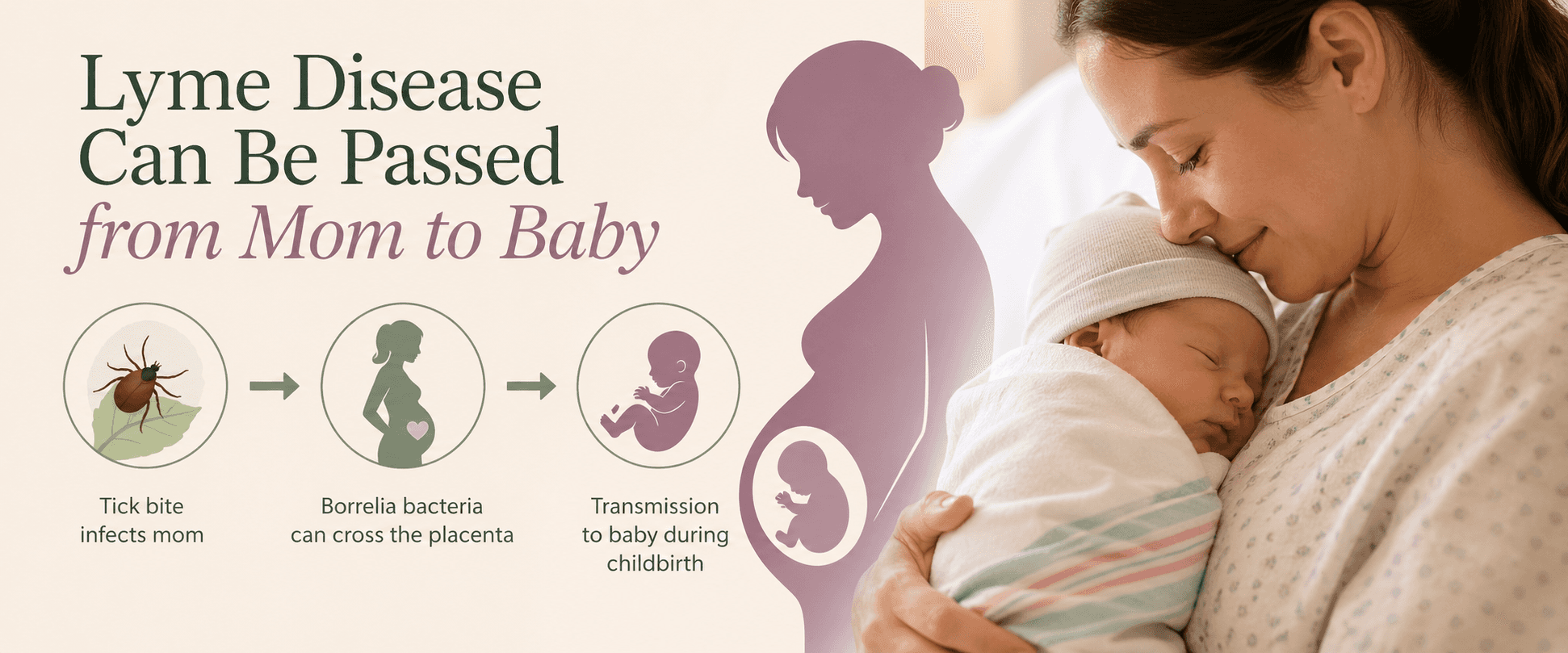
The review presents substantial evidence that Borrelia burgdorferi can cross the placenta during pregnancy, resulting in perinatal transmission of infection to the unborn fetus. Researchers have documented the presence of spirochetal bacteria responsible for Lyme infection in placental tissue, fetal tissue, and newborns, providing evidence of in utero exposure.
The findings of multiple studies summarized by Faber et al. indicate that untreated Lyme disease during pregnancy may be associated with adverse outcomes, including miscarriage, stillbirth, preterm birth, and neonatal complications. Some studies also describe inflammatory changes in the placenta, suggesting that infection-related immune responses could play a role in these outcomes.
One of the most consistent themes in the research is the importance of timely care. Faber et al. highlight that appropriate antibiotic treatment during pregnancy appears to significantly reduce the risk of complications.
What This Means for Women
The findings from Michal Tal and Faber et al. suggest that Lyme disease may be more systemic than traditionally understood. The potential for bacterial persistence in reproductive tissues, combined with evidence of placental involvement, points to a complex interaction between infection, the immune system, and reproductive health.
For women, this evolving research underscores the importance of awareness and proactive care. Those with a history of Lyme disease or tick exposure may benefit from paying closer attention to reproductive health changes, including menstrual irregularities, pelvic pain, or complications during pregnancy.
Perinatal Lyme disease remains under-recognized in clinical settings. Limited awareness, lack of standardized diagnostic criteria, and symptoms overlapping with other conditions can make it more difficult to identify and manage effectively. Discussing potential exposure and symptoms with a healthcare provider before and during pregnancy, and seeking timely evaluation, especially after a tick bite or if Lyme disease is suspected, can help ensure that appropriate care is considered early.
Moving Forward
Both research efforts highlight research gaps and point to the need for continued investigation into how Lyme disease affects women’s health, pregnancy outcomes, and the potential long-term impacts on children from congenital exposure. Future studies may further clarify risk factors, improve diagnostic approaches, and guide more effective prevention and treatment strategies.
Staying informed and engaged with emerging science remains one of the most valuable tools for protecting both reproductive health and the well-being of future generations.